
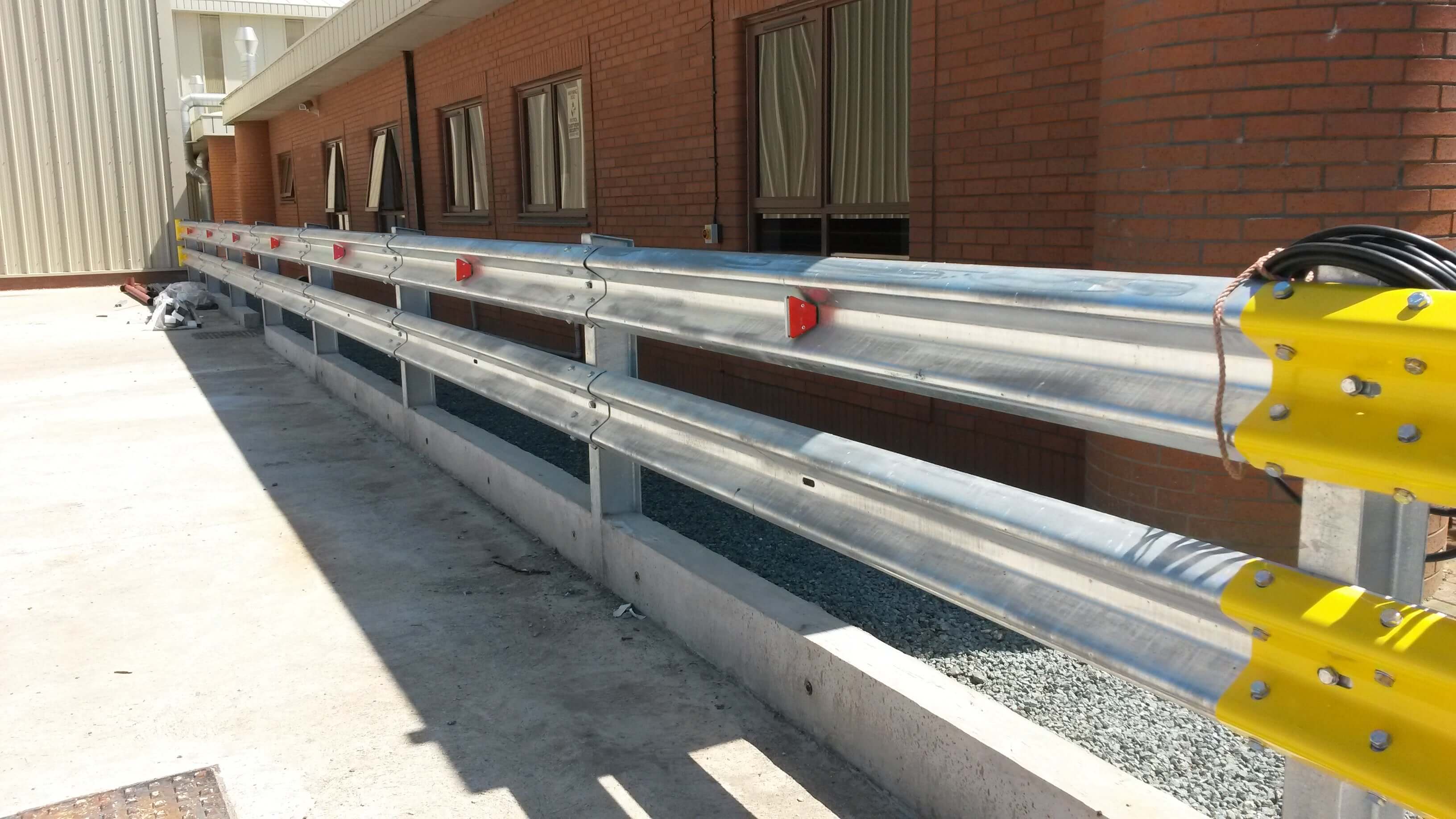
When it comes to protecting personnel, equipment, and infrastructure in industrial environments, Armco barriers stand as one of the most reliable and cost-effective safety solutions available. Whether you're managing a busy warehouse, distribution centre, or manufacturing facility, understanding how these robust barrier systems work—and how to choose the right configuration—is essential for maintaining a safe, compliant workplace.
What Are Armco Barriers?
Armco barriers, named after the American Rolling Mill Company that pioneered their design, are heavy-duty steel safety barriers originally developed for roadside crash protection. Today, they've become the gold standard for industrial and warehouse applications where high-impact resistance is required.
These modular barrier systems typically consist of corrugated steel beams mounted on sturdy posts, creating a flexible yet strong protective barrier that can absorb and redirect impact energy. Unlike rigid concrete barriers, Armco systems are designed to deform slightly upon impact, dissipating force and reducing damage to both the barrier and the impacting object—whether that's a forklift, pallet truck, or delivery vehicle.
Why Armco Barriers Are Essential for Warehouse Safety
Impact Resistance
Armco barriers are engineered to withstand significant force. In busy warehouses where forklifts, reach trucks, and other mobile equipment operate continuously, accidental collisions are inevitable. A properly installed Armco system can absorb impacts that would otherwise damage structural columns, racking systems, or injure personnel.
Personnel Protection
Creating physical segregation between pedestrian walkways and vehicle traffic zones is a fundamental requirement under UK Health and Safety Executive (HSE) guidelines. Armco barriers provide a visible, robust boundary that protects workers from moving machinery and prevents unauthorized access to hazardous areas.
Asset Protection
Beyond protecting people, these barriers safeguard expensive infrastructure. A single collision with an unprotected structural column or racking system can result in thousands of pounds in damage and operational downtime. Armco barriers act as the first line of defence, absorbing impacts before they reach critical assets.
Compliance and Insurance
Proper barrier systems help you meet regulatory requirements under the Workplace (Health, Safety and Welfare) Regulations 1992 and the Provision and Use of Work Equipment Regulations 1998. Many insurance providers also offer reduced premiums for facilities with comprehensive safety barrier installations.
Types of Armco Barrier Systems
Single-Rail Barriers
Ideal for light-duty applications and pedestrian protection. These systems feature a single corrugated beam mounted at an appropriate height (typically 500-600mm) to prevent pedestrian access while maintaining visibility across the warehouse floor.
Double-Rail Barriers
The most common configuration for warehouse vehicle traffic. Two parallel beams provide enhanced impact resistance and are suitable for areas with regular forklift and pallet truck movement. The lower rail prevents wheel contact while the upper rail protects vehicle bodies and loads.
Heavy-Duty Triple-Rail Systems
Designed for high-traffic areas or locations where larger vehicles operate. Loading bays, main thoroughfares, and external yard areas often require this level of protection. Triple-rail systems offer maximum impact resistance and are essential where HGVs or reach stackers operate.
Modular Key Clamp Systems
Modern Armco installations increasingly use key clamp connectors, which allow for tool-free assembly and easy reconfiguration. This modular approach is particularly valuable in dynamic warehouse environments where layout changes are frequent. Key clamps provide secure, rigid connections between beams and posts without welding or specialized equipment.
Key Components Explained
Barrier Beams
The corrugated steel rails that form the primary impact surface. Standard lengths range from 1mtr to 3trm being the most common for warehouse applications. The corrugation provides structural strength while allowing controlled deformation during impact.
Support Posts
Vertical columns that anchor the system to the floor. Posts are typically spaced 1.5m to 3m apart depending on the expected impact forces. Heavy-duty applications require closer spacing and deeper foundation fixings.
Key Clamps and Connectors
These specialized fittings secure beams to posts at precise angles. Lockinex key clamp systems use a simple bolt-through design that creates rigid connections while allowing for future adjustments or repairs.
Base Plates and Fixings
The foundation of any barrier system. Base plates distribute load across the floor surface, while anchor bolts (typically M16 or M20 resin anchors) secure the system to concrete floors. Proper fixing depth and spacing are critical for system integrity.
End Caps and Terminal Posts
Safety features that prevent sharp edges and provide proper termination points for barrier runs. Terminal posts are often reinforced to handle the additional stress at barrier endpoints.
Choosing the Right Armco Barrier for Your Application
Assess Your Risk Profile
Start by identifying high-risk areas: loading bays, pedestrian crossings, column protection zones, and main traffic routes. Consider the types of vehicles operating in each area and their typical speeds. A slow-moving pallet truck requires different protection than a fast-moving counterbalance forklift.
Calculate Impact Requirements
While detailed engineering calculations may require professional input, general guidelines suggest:
- Light pedestrian areas: Single-rail systems rated to 5kN
- Standard warehouse traffic: Double-rail systems rated to 15-25kN
- Heavy-duty/loading areas: Triple-rail systems rated to 50kN+
Consider Floor Conditions
Armco barriers require solid concrete floors with adequate thickness (typically minimum 150mm) for proper anchoring. Older floors or those with existing damage may need reinforcement before installation.
Plan for Flexibility
Warehouse layouts evolve. Choosing modular key clamp systems allows you to reconfigure barriers as your operation changes, protecting your investment and avoiding costly reinstallation.
Visibility and Marking
High-visibility yellow powder coating is standard for warehouse barriers, ensuring they're clearly visible to operators. Consider adding reflective striping in low-light areas or where vehicle speeds are higher. Hi Visibility Polymer Ends and corners are a good choice.
Installation Best Practices
Professional Survey
Before installation, conduct a thorough site survey to identify optimal barrier placement, floor condition assessment, and any underground services that might affect fixing locations.
Proper Spacing
Post spacing should match the expected impact forces. Standard warehouse applications typically use 2.5m to 3m spacing, while heavy-duty areas may require 1.5m to 2m spacing for additional strength. Consult Lockinex for further guidance.
Anchor Depth and Quality
Use appropriate mechanical fixings or resin anchor systems with minimum embedment depths of 100mm for standard applications. Heavy-duty installations may require 150mm+ depth. Always follow manufacturer specifications and allow proper curing time.
Height Considerations
Lower rail height should align with typical vehicle impact points (300-500mm for forklift wheels). Upper rails should protect loads and vehicle bodies (typically 800-1000mm). Ensure adequate ground clearance for cleaning equipment.
Testing and Certification
Once installed, conduct pull tests on a sample of fixings to verify anchor integrity. Document the installation with photographs and maintain records for insurance and compliance purposes.
Maintenance and Inspection
Regular Visual Inspections
Weekly walk-throughs should identify any visible damage, loose fixings, or deformation. Impact damage should be assessed immediately to determine if repairs are needed.
Quarterly Detailed Inspections
Check all fixings for tightness, inspect welds or clamp connections for cracks, and verify that barrier alignment hasn't shifted. Document findings and schedule repairs as needed.
Post-Impact Assessment
After any significant collision, inspect the entire barrier run—not just the impact point. Hidden damage to fixings or adjacent sections can compromise system integrity.
Replacement Criteria
Barriers showing permanent deformation beyond 100mm, cracked welds, or damaged fixings should be repaired or replaced promptly. The modular nature of key clamp systems makes component replacement straightforward and cost-effective.
Cost Considerations and ROI
While initial investment in quality Armco barrier systems may seem substantial, the return on investment is compelling:
- Accident Prevention: A single serious injury can cost tens of thousands in compensation, lost productivity, and HSE investigation time
- Asset Protection: Preventing damage to racking, columns, or machinery pays for barrier systems many times over
- Insurance Benefits: Reduced premiums and excess fees for facilities with comprehensive safety systems
- Operational Continuity: Avoiding downtime from structural damage or accident investigations
- Compliance Confidence: Reducing risk of enforcement action or prohibition notices
Most warehouse operators find that comprehensive barrier systems pay for themselves within 2-3 years through avoided costs alone.
Compliance and Standards
UK warehouse operators should ensure their barrier systems meet or exceed:
- BS EN 1317: Road restraint systems (adapted for industrial use)
- HSE Guidance: Workplace transport safety (HSG136)
- BS 7671: Electrical safety where barriers protect electrical infrastructure
- Local authority requirements: Building control and structural considerations
For operations across multiple markets, be aware that EU and UK standards may have different requirements for impact resistance, height, and marking.
Conclusion: Investing in Safety and Efficiency
Armco crash barriers represent one of the most effective investments you can make in warehouse safety. Their proven track record, modular flexibility, and robust performance make them the preferred choice for industrial facilities worldwide.
Whether you're protecting personnel in pedestrian zones, safeguarding structural columns, or creating safe vehicle routes through your facility, understanding the fundamentals of Armco barrier systems ensures you choose the right solution for your specific needs.
At Lockinex, we specialize in providing high-quality Armco barriers, key clamp systems, and all the components needed for professional installation. Our team can help you assess your requirements, specify the appropriate system, and ensure your facility meets all relevant safety standards.
Ready to enhance your warehouse safety? Contact our technical team to discuss your specific requirements, or browse our complete range of Armco barriers and key clamp components.
Next in our series: "Key Clamp Systems Explained: Modular Barrier Installation Made Simple" – Learn how modern key clamp technology makes barrier installation faster, more flexible, and more cost-effective than ever before.